
Curriculum
The Curriculum at The Stonebridge School
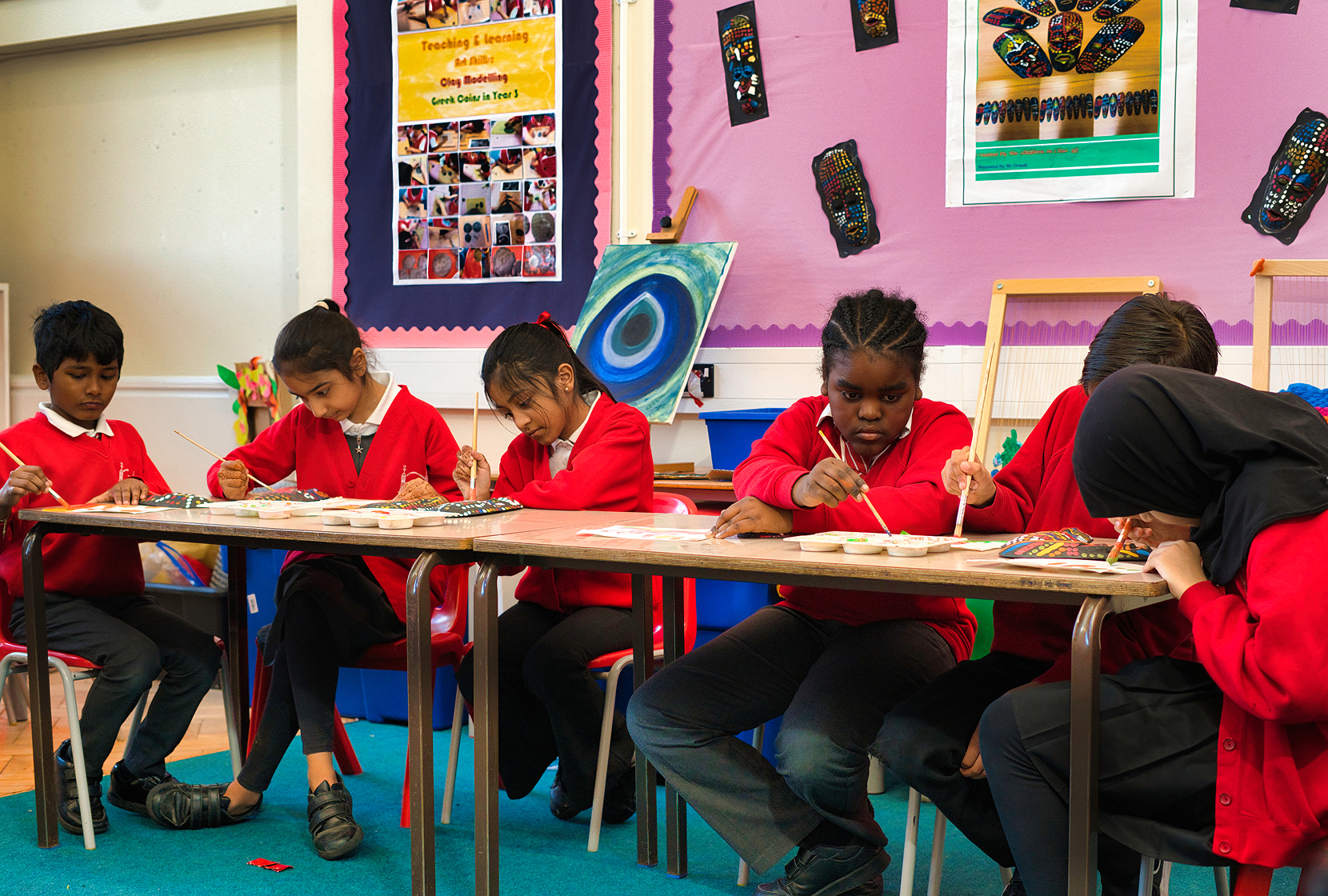
At Stonebridge we aim to provide a stimulating school environment to ensure that all children achieve their full potential. Our aim is to ensure that children have a range of experiences that are as wide as possible during their time at school. We endeavour to teach to the highest standards in ways that match each child’s own aptitude and ability. That means offering a curriculum that is broad, balanced and right for each child. Children are taught using a variety of methods, which include whole class teaching, group work and individual work. Teachers choose the most appropriate method depending on the nature of the subject and the needs of the children.
Children’s personal qualities are equally important, and we aim to help children to develop a sense of consideration and self-confidence so that they value themselves and their abilities and make a full contribution to the life of the school and prepare for adulthood. This is reflected in our School Values
All classes from Year 1 to Year 6 follow the National Curriculum which includes the subjects of English, Mathematics, Science, Computing, Geography, History, Music, Art, Physical Education and Religious Education.
Classes in our Nursery and Reception settings are in the Early Years Foundation Stage. They follow the Statutory framework for the early years foundation stage Setting the standards for learning, development and care for children from birth to five, which covers the 7 areas of learning and development; Communication and Language, Personal, Social and Emotional Development, Physical Development, Literacy, Mathematics, Understanding the World and Expressive Art and Design. These areas are broken down into Early Years Outcomes which lead on to the Early Learning Goals. These areas of learning and development are taught mainly in units and sometimes as part of a cross-curricular topic.
Pupils at The Stonebridge Primary School will leave Year 6 having the following qualities:
- Adaptable so they can adjust to the changing world
- Developed self believe so they are not afraid to question and voice their views
- Have the resilience to stand up for their rights
- Reading and writing with confidence, fluency and understanding, using a range of independent strategies to self-monitor and correct
- With a love of reading and a desire to read for enjoyment
- With a passion for words and their meanings; developing a growing vocabulary in spoken and written forms
- Understanding a range of text types, media types and genres;
- Able to write in a variety of styles and forms appropriate to the situation
- Using their developing imagination, inventiveness and critical awareness
- Having a suitable technical vocabulary to articulate their responses
More information about the Primary National Curriculum can be found on the Department for Education website.
Parents and members of the public, are welcome to contact the school office, to find out more about the Stonebridge Curriculum. See contact details below.
Email: admin@stonebridge.brent.sch.uk or call Tel: 020 8965 6965
Curriculum principles are LEAP
LEAP represents the curriculum principles that guide learning at our school. These principles were agreed upon by key stakeholders so that the curriculum offer can address the barriers that the children enter The Stonebridge School with.
Our children come to Stonebridge requiring language development, various experiences pathways to ignite their ambition as well learning that builds on prior learning. Our principles are interwoven in all curriculum areas to ensure our children are successful.
Our LEAP curriculum principles are:
- Language-Rich – We nurture confident communication by providing rich opportunities to talk, listen, and build vocabulary, enabling children to express ideas clearly and to a high standard.
- Experiential – We bring learning to life through hands-on experiences (trips, visits, art/design, and real-world exploration) that inspire curiosity and deepen understanding.
- Ambitious – We set the highest expectations for every learner, encouraging them to achieve their best and believe in their potential.
- Purposeful – We design learning that builds on prior knowledge, carefully addressing gaps to ensure meaningful, connected progress.
Together, these principles empower children to LEAP forward in their academic, social and emotional learning and fulfil their potential.

REMOTE LEARNING
At Stonebridge Primary School we have the right to:
Article 28: children have the right to a good quality education.
This information is intended to provide clarity and transparency to pupils and parents or carers about what to expect from remote education where national or local restrictions require entire cohorts (or bubbles) to remain at home.
For details of what to expect where individual pupils are self-isolating, please see the final section of this page. Please also refer to our Remote Learning Policy.
Learning resources:


The Curriculum at The Stonebridge School
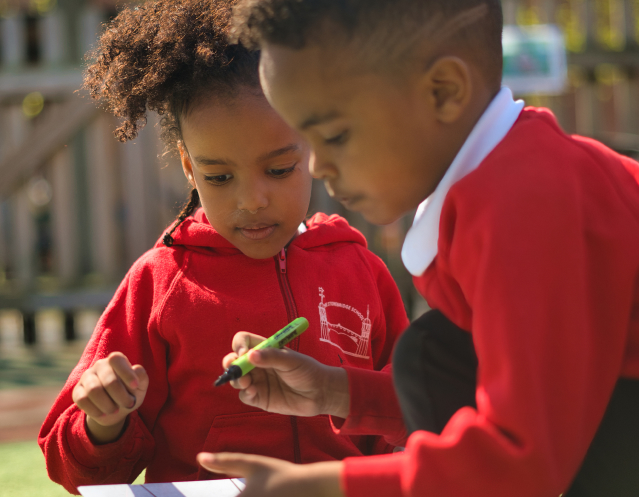
At Stonebridge we aim to provide a stimulating school environment to ensure that all children achieve their full potential. Our aim is to ensure that children have a range of experiences that are as wide as possible during their time at school. We endeavour to teach to the highest standards in ways that match each child’s own aptitude and ability. That means offering a curriculum that is broad, balanced and right for each child. Children are taught using a variety of methods, which include whole class teaching, group work and individual work. Teachers choose the most appropriate method depending on the nature of the subject and the needs of the children.
Children’s personal qualities are equally important, and we aim to help children to develop a sense of consideration and self-confidence so that they value themselves and their abilities and make a full contribution to the life of the school and prepare for adulthood. This is reflected in our School Values

All classes from Year 1 to Year 6 follow the National Curriculum which includes the subjects of English, Mathematics, Science, Computing, Geography, History, Music, Art, Physical Education and Religious Education.
Classes in our Nursery and Reception settings are in the Early Years Foundation Stage. They follow the Statutory framework for the early years foundation stage Setting the standards for learning, development and care for children from birth to five, which covers the 7 areas of learning and development; Communication and Language, Personal, Social and Emotional Development, Physical Development, Literacy, Mathematics, Understanding the World and Expressive Art and Design. These areas are broken down into Early Years Outcomes which lead on to the Early Learning Goals. These areas of learning and development are taught mainly in units and sometimes as part of a cross-curricular topic.
Pupils at The Stonebridge Primary School will leave Year 6 having the following qualities:
- Adaptable so they can adjust to the changing world
- Developed self believe so they are not afraid to question and voice their views
- Have the resilience to stand up for their rights
- Reading and writing with confidence, fluency and understanding, using a range of independent strategies to self-monitor and correct
- With a love of reading and a desire to read for enjoyment
- With a passion for words and their meanings; developing a growing vocabulary in spoken and written forms
- Understanding a range of text types, media types and genres;
- Able to write in a variety of styles and forms appropriate to the situation
- Using their developing imagination, inventiveness and critical awareness
- Having a suitable technical vocabulary to articulate their responses
More information about the Primary National Curriculum can be found on the Department for Education website.
Parents and members of the public, are welcome to contact the school office, to find out more about the Stonebridge Curriculum. See contact details below.
Email: admin@stonebridge.brent.sch.uk or call Tel: 020 8965 6965.
THE REMOTE CURRICULUM: WHAT IS TAUGHT TO PUPILS AT HOME:
A pupil’s first day or two of being educated remotely might look different from our standard approach, while we take all necessary actions to prepare for a longer period of remote teaching.
What should my child expect from immediate remote education in the first day or two of pupils being sent home?
| Pupils will be expected to access activities on Active Learn, Mathletics and complete any home learning tasks that have been set on J2E. KEY STAGE 2 PUPILS: Will be given a writing task to be completed by the end of day 2 (unless otherwise advised) which should be uploaded onto J2E. The writing task will relate to the current writing objectives & genre being taught. |
Following the first few days of remote education, will my child be taught broadly the same curriculum as they would if they were in school?
| We teach the same curriculum remotely as we do in school wherever possible and appropriate. However, we have needed to make some adaptations in some subjects. For example where the content matter is dependent on resources and equipment that is only available in school or where the content matter is not easily accessible in a remote learning context. |
REMOTE TEACHING AND STUDY TIME EACH DAY
How long can I expect work set by the school to take my child each day?
We expect that remote education (including remote teaching and independent work) will take pupils broadly the following number of hours each day at least:
| EYFS | Nursery – Story Time with speaking and listening activities Daily – 1.5 hrs Reception – 2.5 to 3 hrs |
| Key Stage 1 | 3 hrs |
| Key Stage 2 | Year 3 & Year 4 – 3.5 hrs Year 5 & Year 6 – 4 hrs |
ACCESSING REMOTE EDUCATION
How will my child access any online remote education you are providing?
| ACTIVE LEARN | MATHLETICS | ||
| J2E / BUSY THINGS | WHITE ROSE MATHS VIDEOS |  | |
| ZOOM (for online lessons / assemblies) |
If my child does not have digital or online access at home, how will you support them to access remote education?
We recognise that some pupils may not have suitable online access at home. We take the following approaches to support those pupils to access remote education:
| Parents who need any help with devices should contact the school office on admin@stonebridge.brent.sch.uk or ring on 02089656965. Alternatively, parents can speak to the class teacher. We have a current and up to date directory of devices that have been given out to pupils during the January lockdown so these devices will be used. Any devices that are lent by the school remain the property of the school and an Acceptable User Policy (AUP) and must be signed before the device is taken from the building. Any devices that are lent by the school remain the property of the school and an Acceptable User Policy (AUP) and must be signed before the device is taken from the building. We will continue to access devices and dongles through the Government Get Help With Technology scheme, when offered. PLEASE NOTE THAT DUE TO FINANCIAL CONTRAINTS ANY SCHOOL BASED EQUIPMENT LENT MUST BE RETURNED IN GOOD CONDITION TO ENSURE THE ONGOING EDUCATION OF PUPILS ACROSS THE SCHOOL WHEN THEY ARE SCHOOL BASED. Teachers will respond to work outcomes that are uploaded onto J2E. If printed materials are required they can be requested as above, however we strongly encourage our families to utilise the J2E platform. For all the above there will be a processing period and families will be contacted to collect the materials. |
How will my child be taught remotely?
| Live teaching (online lessons) – Maths / English / Foundation Subjects / Art /PSHE – Circle Time Recorded teaching (appropriate video/audio recordings made by teachers which support the teaching and learning content) Printed paper packs produced by teachers (e.g. workbooks, worksheets) Textbooks and reading books pupils have at home Commercially available websites supporting the teaching of specific subjects or areas, including video clips or sequences e.g. White Rose Maths & Active Learn Long-term project work and/or internet research activities – where appropriate – content, stage and age being considered Phase and year group Assemblies |
We use a combination of the following approaches to teach pupils remotely:
Engagement and feedback
What are your expectations for my child’s engagement and the support that we as parents and carers should provide at home?
| Expectations for pupils’ engagement with remote education Expectations of parental support, for example, setting routines to support your child’s education – maintaining good sleep patterns, organisation of times during the day, exercise Children are expected to be ready for learning i.e. dressed appropriately and arrive at sessions on time. Children are expected to attend all sessions or the absence should be explained as required when school is fully open Children should be supported to access the learning in a quiet area wherever possible. Children are expected to use their camera and have an identifiable name to join any online lesson Children are expected to follow the online-Safety ground rules and behaviour for learning at all times i.e. only using the chat facility when directed Please also see the Golden Rules which are included in our Remote Learning Policy. |
How will you check whether my child is engaging with their work and how will I be informed if there are concerns?
| Pupils’ engagement with remote education will be checked daily by the attendance register and the monitoring of work outcomes that have been requested Class teachers will also carry out regular phone calls and email contact with parents where there are concerns about limited engagement. Attendance Registers will be monitored weekly and follow up phone calls / letters will be made. If the school is unable to contact the family we will enlist the support of outside agencies i.e. Education Welfare Officer / Social Care etc. |
How will you assess my child’s work and progress?
Feedback can take many forms and may not always mean extensive written comments for individual children. For example, whole-class feedback or quizzes marked automatically via digital platforms are also valid and effective methods, amongst many others. Our approach to feeding back on pupil work is as follows:
| Children will receive verbal feedback in live sessions on work completed during lessons and submitted onto the digital platforms; they will also receive feedback on outcomes submitted on J2E on a regular basis. Our Feedback and Marking Policy will be applied during a lockdown, partial closure due to self-isolation requirements as well as during school being fully open. Teachers will use quizzes to assess knowledge and understanding of content covered at regular points during learning sequences. Key Objectives will be taught and assessed as part of our ongoing Teacher assessment procedures. |
Additional support for pupils with particular needs
How will you work with me to help my child who needs additional support from adults at home to access remote education?
We recognise that some pupils, for example some pupils with special educational needs and disabilities (SEND), may not be able to access remote education without support from adults at home. We acknowledge the difficulties this may place on families, and we will work with parents and carers to support those pupils in the following ways:
| All pupils with an EHCP have been invited into the Priority Group provision where they will be supported in line with their EHCP to access the curriculum. Support staff will be utilised in live lessons to support pupils via breakout rooms where content can be adjusted and tasks differentiated as necessary. Personalised resource packs will also be created and provided for EHCP pupils, where appropriate, to help support their access to home learning. |
Remote education for self-isolating pupils
Where individual pupils need to self-isolate, but the majority of their peer group remains in school, how remote education is provided will likely differ from the approach for whole groups. This is due to the challenges of teaching pupils both at home and in school.
If my child is not in school because they are self-isolating, how will their remote education differ from the approaches described above?
| Pupils will be offered remote learning which will include some of the following: Recorded teaching (appropriate video/audio recordings which support the teaching and learning content) Printed paper packs produced by teachers (e.g. workbooks, worksheets) Textbooks and reading books pupils have at home Commercially available websites supporting the teaching of specific subjects or areas, including video clips or sequences e.g. white rose maths & Active Learn Long-term project work and/or internet research activities – where appropriate – content, stage and age being considered Invites to phase and year group assemblies Children will receive feedback to work submitted on J2E on a regular basis. Contact will be made with the family during the absence to offer any support and pastoral care. Families who need any support should contact the school office on 02089656965 or email admin@stonebridge.brent.sch.uk |